Efficient Plumbing
Things to think about when ordering a container house
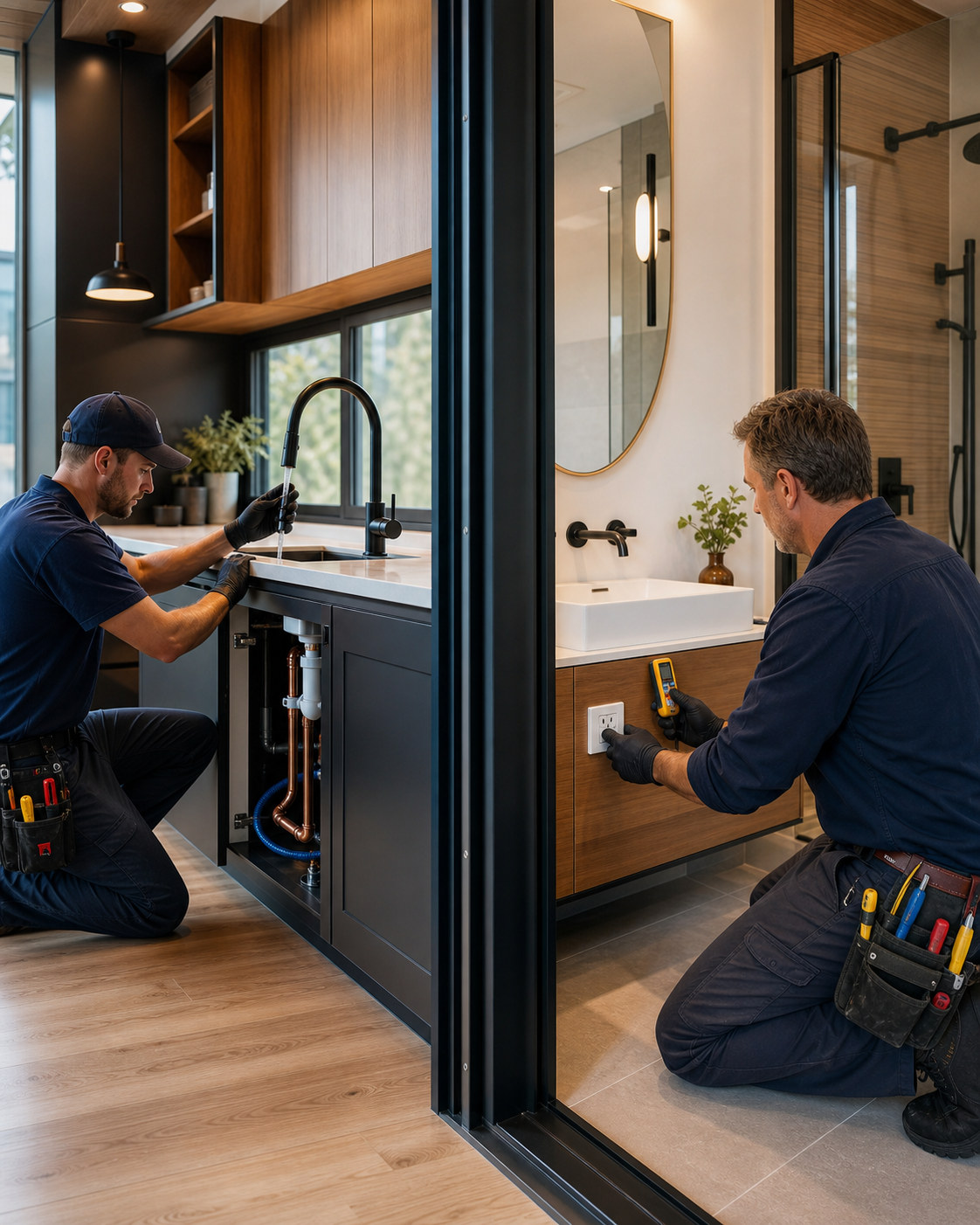
Of course, an important step in the installation of a new container house, is the plumbing and electricity connexons. Depending on the model and the customization, it can be very easy but if you have the knowledge, best to rely on professional in your area who will very easily and at reasonable cost connect you services.
Search for Registered, Qualified Contractors You are a contractor and want to become referred in our directory?
About the Plumbing…
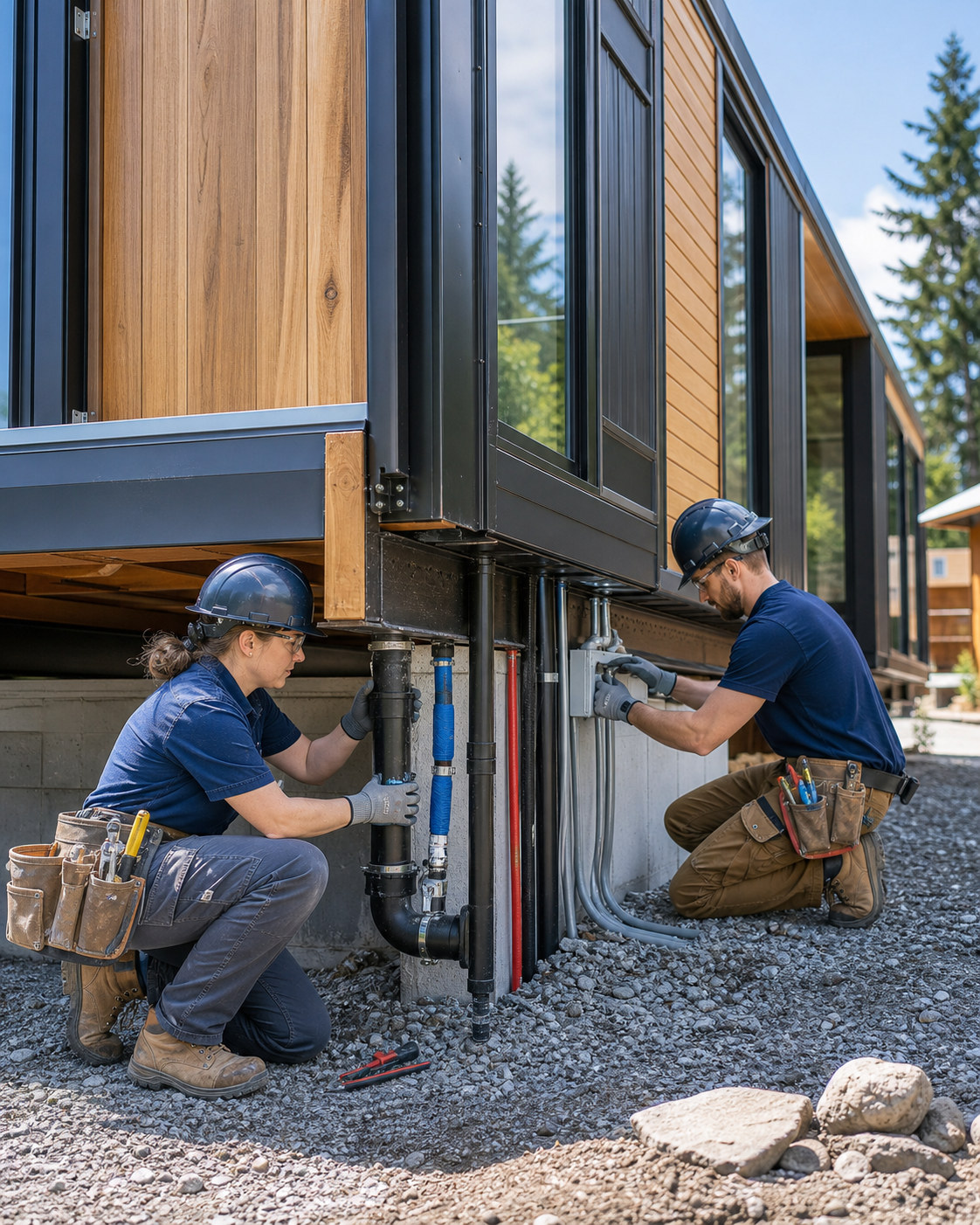
Here is an example of the water and drain connexons. It can be placed pretty much anywhere you like. It can be underneath your container house or on the sides. It is very important that these connexons be insolated to prevent water from freezing in sub zero temperature We insolate these connexons the pipe section, inside the container houses. These water distribution and waste water are made very simple. It will be easy for any experience plumber or anyone has some knowledge about plumbing.
Basically, every residential container houses require a toilet, a minimum of 1 sick in the kitchen area (you can add one in the bathroom) and a shower. You may wish to add a washer/dryer unit like a 2 in 1 model or one on top of the other model to save space
Safe Electricity
About electricity…
The electricity hookup can be fairly easy. By default, the container houses use 120volts in North America.
You can request a 220volts outlet. Small ovens usually require a 120volts with a 30 amp breaker. Simply let us know what type and how many you require when asking for a quote! When it comes to the interior electrical setup of your container home, especially if it’s anything beyond basic, it’s always a wise choice to hire a professional electrician.
A qualified electrician can handle everything from wiring and panel installation to the placement of outlets and lighting fixtures, guaranteeing a safe and functional electrical system in your new home.

In Conclusion
Plumbing and electricity
About plumbing and electricity in your new container house
“We can’t overlook the importance of good plumbing and electricity in your new container house. Proper plumbing ensures access to clean water for drinking, cooking, and sanitation, which is essential for health and comfort.
It also prevents issues such as leaks, water damage, and mold, which can compromise the structural integrity of your container home. Similarly, reliable and safely installed electrical systems are crucial for powering lighting, heating, cooling, appliances, and electronic devices.
Good electrical work not only enhances convenience and functionality but also ensures safety by minimizing the risk of electrical fires or shocks. Investing in professional plumbing and electrical installations will contribute significantly to the durability, safety, and livability of your container house.”
Plumbing and electricity safety
Plumbing and Electricity Safety in Canada Plumbing and electrical systems are critical components of residential, commercial, and industrial buildings across Canada. Ensuring safety in these areas is essential to protect residents, workers, and property from potential hazards such as water damage, electrical fires, or electrocution.
The Canadian government, along with provincial and territorial authorities, enforces strict regulations, codes, and standards designed to maintain high safety levels.
Plumbing Safety in Canada
1. Regulations and Codes: Plumbing systems in Canada must adhere to the National Plumbing Code of Canada (NPC), which sets out technical requirements for the design, installation, and maintenance of plumbing systems. Provincial and municipal regulations may also apply, often requiring permits and inspections for new installations or major repairs.
2. Licensed Professionals: Plumbing work typically must be carried out by licensed plumbers who have undergone rigorous training and certification. This ensures that the work complies with safety and health standards, prevents leaks, contamination, and ensures proper sanitation.
3. Water Quality and Health: Proper plumbing installation helps prevent contamination of potable water supplies by backflow or cross-connection. Safety devices such as backflow preventers are mandatory in many cases to protect public health.
4. Preventative Measures: Canadian plumbing systems are frequently designed to withstand cold temperatures to prevent pipe freezing and bursting. Insulation and heat tracing are common techniques used in colder climates to maintain the integrity of the plumbing infrastructure.
5. Environmental Considerations: Many plumbing codes encourage or mandate water conservation measures, such as low-flow fixtures and water-efficient appliances, contributing to sustainable water use.
Electricity Safety in Canada
1. Electrical Code Compliance: Electrical installations and maintenance must comply with the Canadian Electrical Code (CEC), which outlines safety standards for wiring, grounding, circuit protection, and installation practices. Compliance is critical to reduce the risk of electrical fires and shocks.
2. Inspection and Licensing: Electrical work must be performed by certified electricians who are familiar with the code requirements and safety protocols. Municipal electrical inspectors typically oversee installations and upgrades to ensure rule adherence.
3. Ground Fault and Arc Fault Protection: Modern electrical systems in Canada incorporate ground fault circuit interrupters (GFCIs) and arc fault circuit interrupters (AFCIs), which greatly reduce the risk of electrocution and electrical fires by quickly shutting off power when dangerous faults are detected.
4. Safe Use of Electrical Appliances: Canadian safety standards require proper labeling and certification of electrical products. Consumers are encouraged to use appliances as directed and to be aware of the risks of overloading circuits or damaged devices.
5. Workplace and Construction Site Safety: Occupational safety regulations mandate strict safety procedures when working with electricity. Workers must use personal protective equipment (PPE), de-energize circuits when possible, and follow lockout/tagout (LOTO) protocols.
6. Emergency Preparedness: Homes and buildings are encouraged to have properly installed smoke detectors, carbon monoxide monitors, and fire extinguishers to respond promptly to electrical hazards and fire emergencies.
Summary In Canada, plumbing and electrical safety is governed by comprehensive codes and regulations supported by certified professionals and regular inspections. These measures ensure the safety, health, and welfare of the public by preventing accidents, health hazards, and structural damage caused by plumbing and electrical failures. Awareness, adherence to standards, and routine maintenance are key to maintaining safe plumbing and electrical systems across the country.
Remember plumbing and electricity have to be done right. For the safety of you and your family

Container Houses Canada
![]()