
Water and drainage
Plan supply lines, waste lines, venting, fixtures, shutoffs, and freeze protection.
PLUMBING AND ELECTRICITY
Plan safe plumbing, drainage and electrical connections for a container house in Canada, including freeze protection, appliances, inspections and qualified local trades.
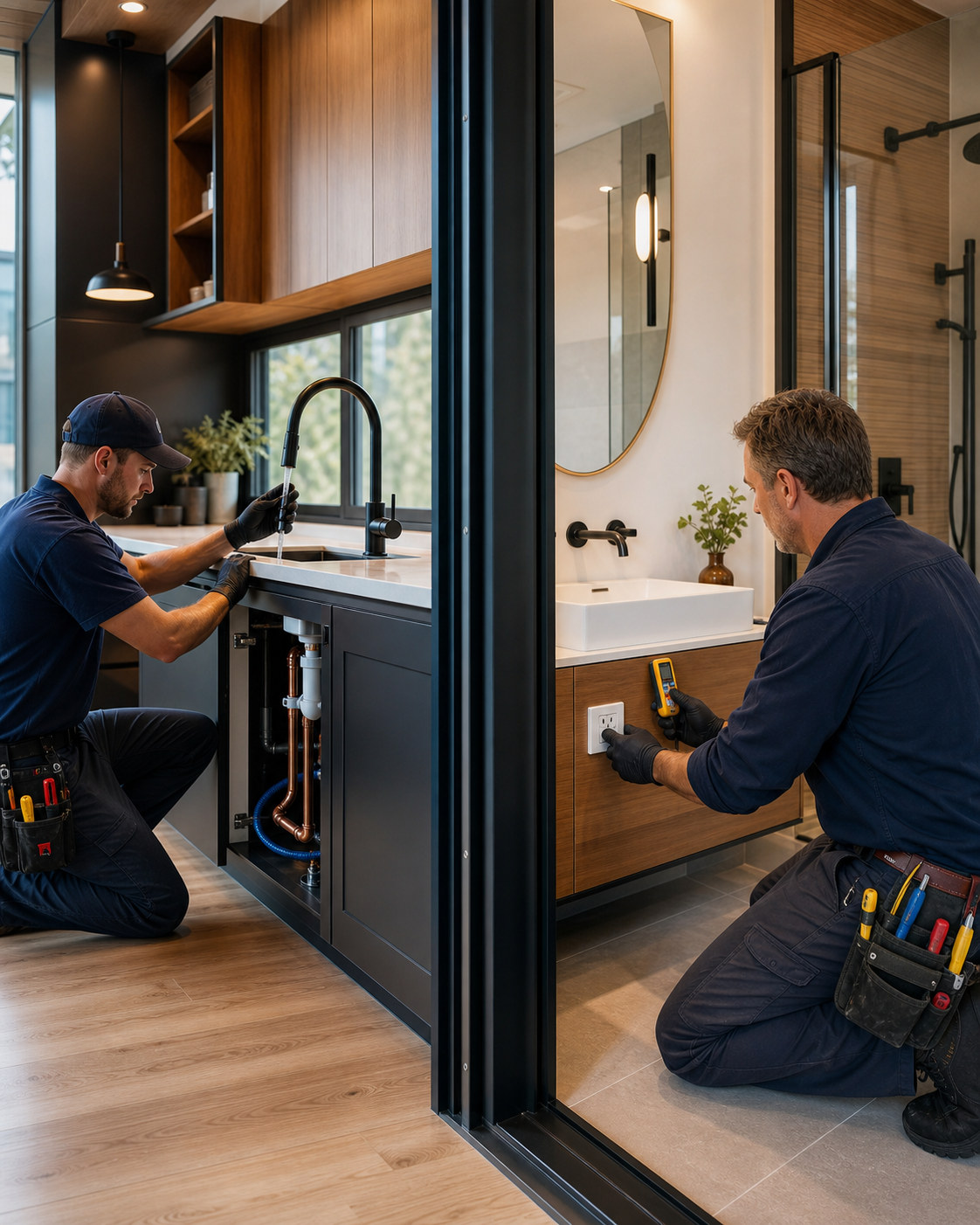 PLUMBING AND ELECTRICITY
POINTS TO REVIEW
Coordinate safe water, drainage, electrical service, appliances, inspections, and professional connections.
Plan supply lines, waste lines, venting, fixtures, shutoffs, and freeze protection.
Confirm voltage, amperage, panel capacity, circuits, appliances, and service location.
Use qualified local plumbers and electricians for final connections and certification.
Coordinate permits, rough-in checks, final inspections, testing, and activation.
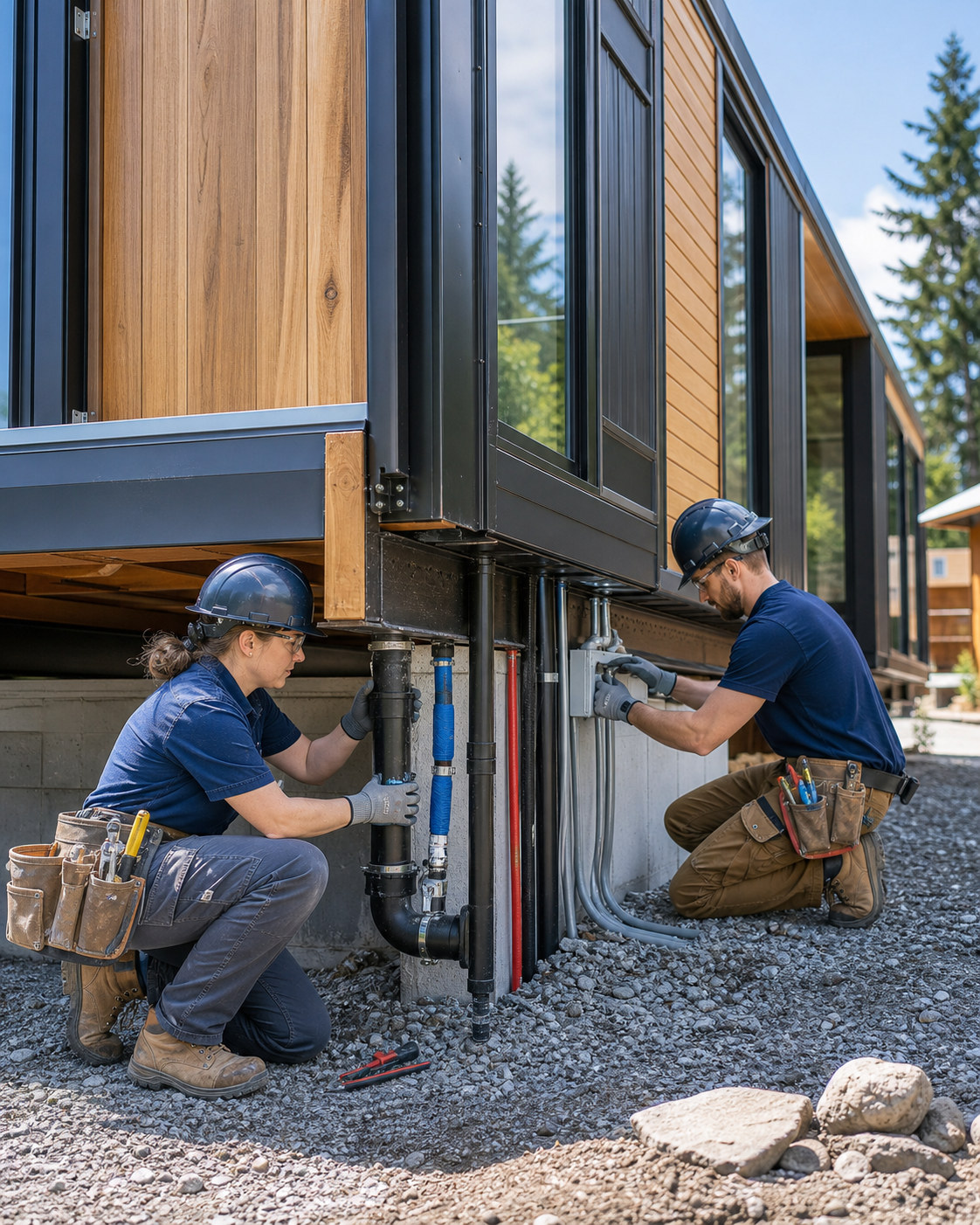 PREPARE THE RIGHT QUESTIONS
BEFORE MOVING FORWARD
The exact answers depend on the property, municipality, model, and professionals involved.
Where will water, waste, and electrical services enter?
Which appliances require dedicated circuits?
Who will complete and certify the final connections?
Which inspections are required before occupancy?
Plumbing and electrical work should be coordinated with the selected container-house model, the property, the foundation and the requirements of the local authority. The factory-installed components and the final site connections are different parts of the project, so the responsibilities of the manufacturer, buyer and local trades should be clear before installation begins.
Confirm where the water supply and waste connections will enter the home and how those lines will connect to municipal services, a well, septic system or another approved setup. Exterior or exposed plumbing must be protected for the local climate. In cold regions, pipe routing, insulation, heat protection and drainage details should be reviewed by the qualified professional responsible for the installation.
The required electrical service depends on the model, appliances, heating and cooling equipment, optional features and local electrical rules. Do not assume that one voltage, panel size or circuit arrangement is correct for every project. Before the final connection, provide the local electrician with the available product information and a list of the equipment that will be installed.
Final plumbing and electrical connections should be completed and inspected as required in the province, territory and municipality where the home will be installed. Local professionals are also best placed to account for site-specific conditions, utility requirements and any changes made after delivery.
Utility work is easier when the foundation, access route and final placement are already confirmed. Review the foundation preparation guide, municipal regulations, insulation planning and on-site delivery requirements together rather than treating them as separate projects.
If you know the model, delivery province, intended use and major utility requirements, include those details with your quotation request.
RELATED NEXT STEPS
Find collections that fit the confirmed requirements.
Explore Our Models →See how we coordinate the product, documentation, and logistics.
View Our Services →Plan property access, unloading, and installation requirements.
View Delivery Details →READY FOR A MORE PRECISE CONVERSATION
Include the model, province, municipality, intended use, and timeline.