
Pre-shipment inspection
Verify the home, options, finishes, and documentation before loading.
PREPARATION AND TRANSPORT
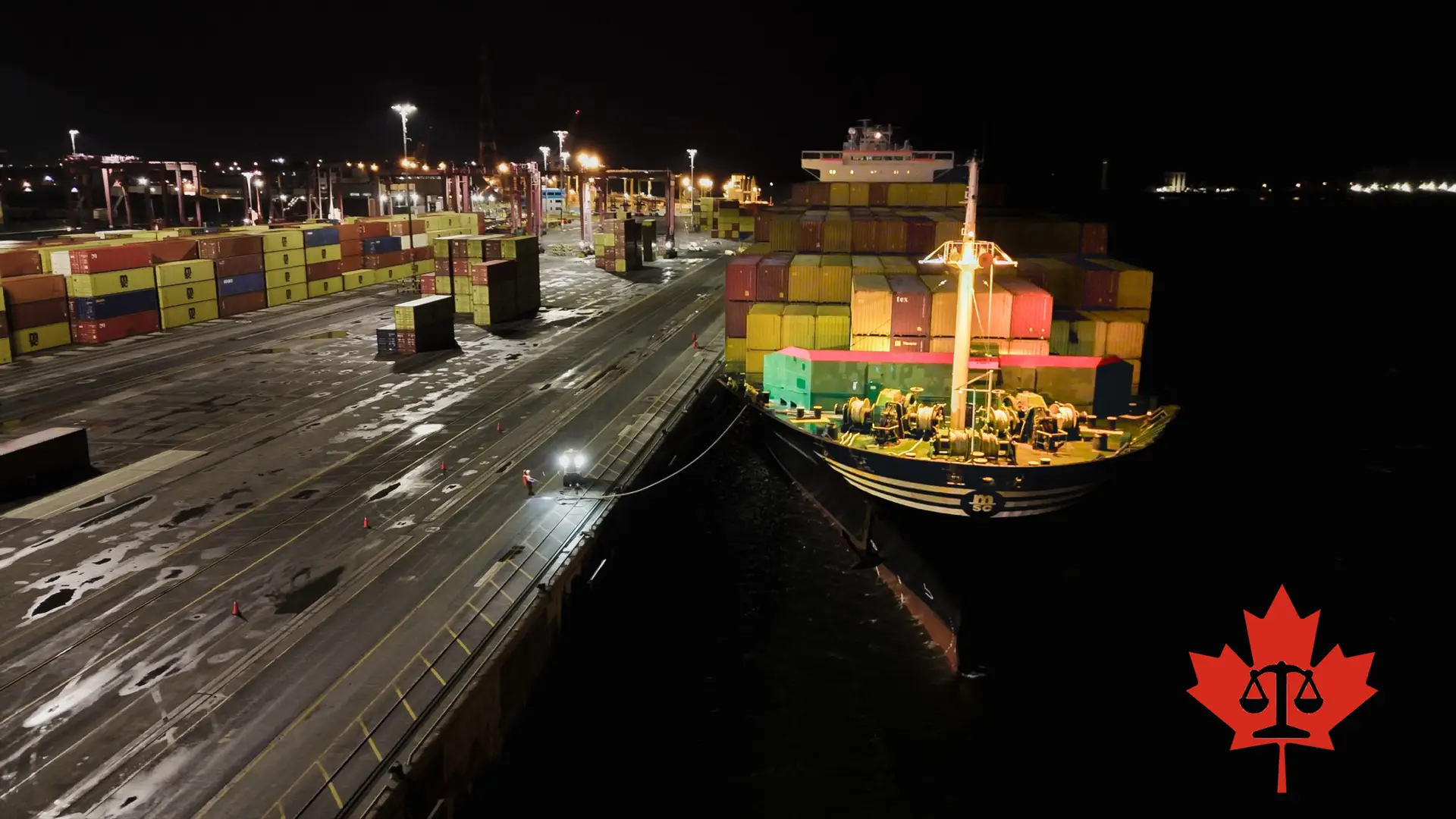
Follow the inspection, protection, documentation, international transport, tracking, customs and inland-delivery stages for a container house shipped to Canada.
 PREPARATION AND TRANSPORT
POINTS TO REVIEW
Follow the preparation, inspection, protection, ocean transport, tracking, customs, and onward-delivery stages.
Verify the home, options, finishes, and documentation before loading.
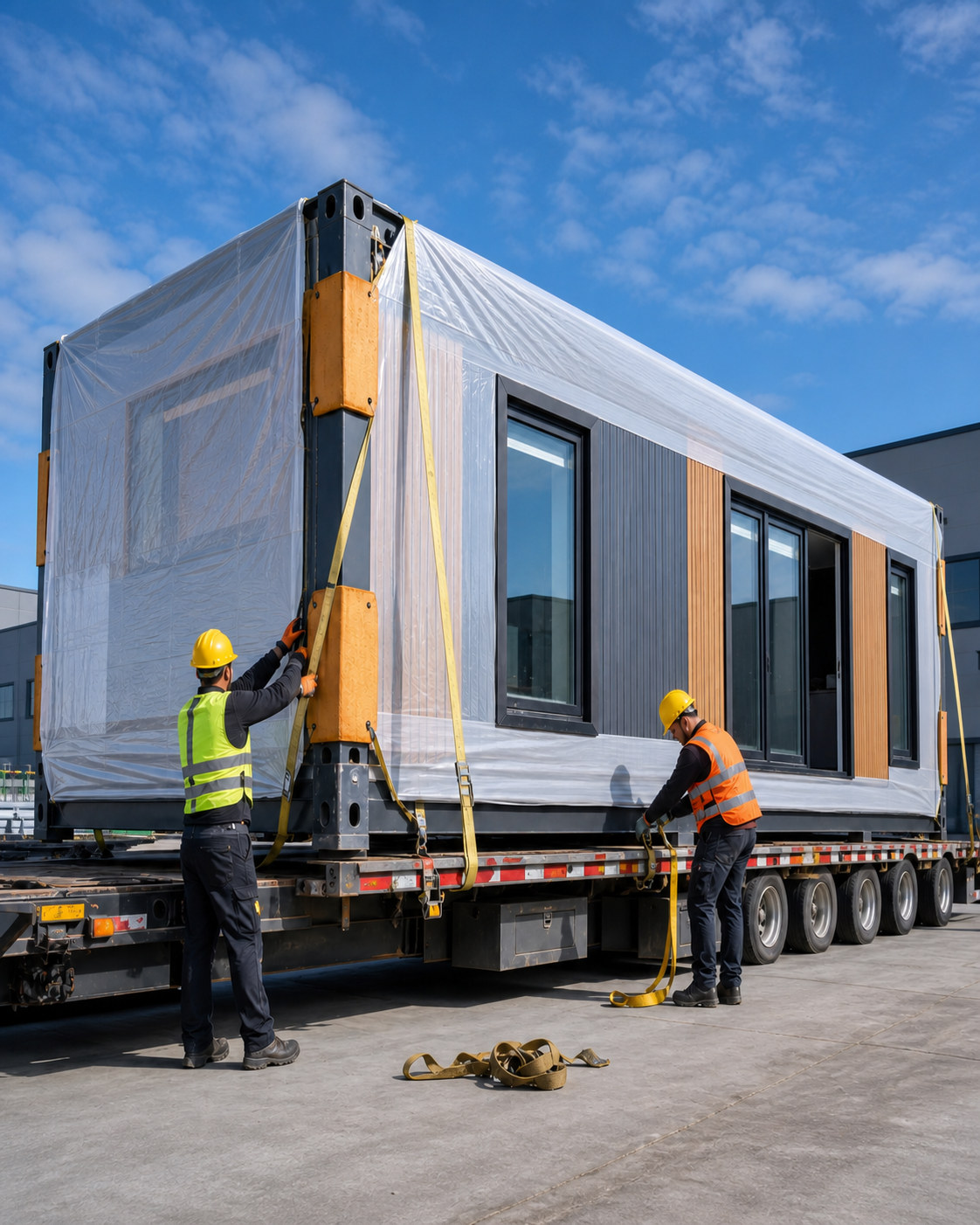
Secure, wrap, brace, and prepare the unit for ocean transportation.
Coordinate vessel loading, tracking, estimated timelines, and port arrival.
Connect customs clearance, port handling, ground transport, and final delivery.
 PREPARE THE RIGHT QUESTIONS
BEFORE MOVING FORWARD
The exact answers depend on the property, municipality, model, and professionals involved.
Has the final product inspection been completed?
Is the unit protected and secured for transport?
Which documents accompany the shipment?
Who coordinates port release and final transportation?
A prefabricated container house should be inspected, documented and protected before it is released for international transportation. The objective is to confirm that the selected model and options match the order, prepare the unit for handling, and make sure the paperwork required for the shipment is available.
Before loading, confirm the model, dimensions, major options and identifying information against the order. Any required corrections should be addressed before the unit enters the international logistics chain.
The unit is prepared for handling and transportation with protection and securement methods appropriate for the model and route. Openings, exterior finishes and components that could be affected by movement or exposure require particular attention.
Commercial and transport documents should use consistent descriptions, values and shipment information. The required records vary by shipment, but accurate documentation helps customs, carriers, terminals and brokers coordinate the same order.
Ocean-transit timing is influenced by the origin port, destination port, vessel schedule, route, weather, terminal conditions and other operational factors. Treat published time ranges as estimates rather than guaranteed arrival dates. Confirmed shipment information and tracking updates are more useful once the unit is actually in transit.
After arrival in Canada, the shipment moves through the applicable customs and terminal process before inland transportation can continue. Review our Canadian Customs guide for the documents and coordination issues to plan in advance.
The final carrier needs a route and receiving area suitable for the size and weight of the unit. Site access, overhead clearance, turning space, ground conditions and unloading equipment should be checked before the delivery appointment is confirmed.
See On Site Delivery for the property-readiness checklist.
The foundation, access route and installation team should be ready before the home reaches the final delivery stage. Avoid scheduling site work from an early estimated vessel date alone; use the latest confirmed logistics information and coordinate the receiving team accordingly.
RELATED NEXT STEPS
Find collections that fit the confirmed requirements.
Explore Our Models →See how we coordinate the product, documentation, and logistics.
View Our Services →Plan property access, unloading, and installation requirements.
View Delivery Details →READY FOR A MORE PRECISE CONVERSATION
Include the model, province, municipality, intended use, and timeline.