
Thermal resistance
Compare insulation type, thickness, R-value, and performance across walls, roof, and floor.
INSULATION AND CLIMATE COMFORT
Understand insulation, air sealing, condensation control and thermal bridging in steel-framed container homes designed for Canadian climates.
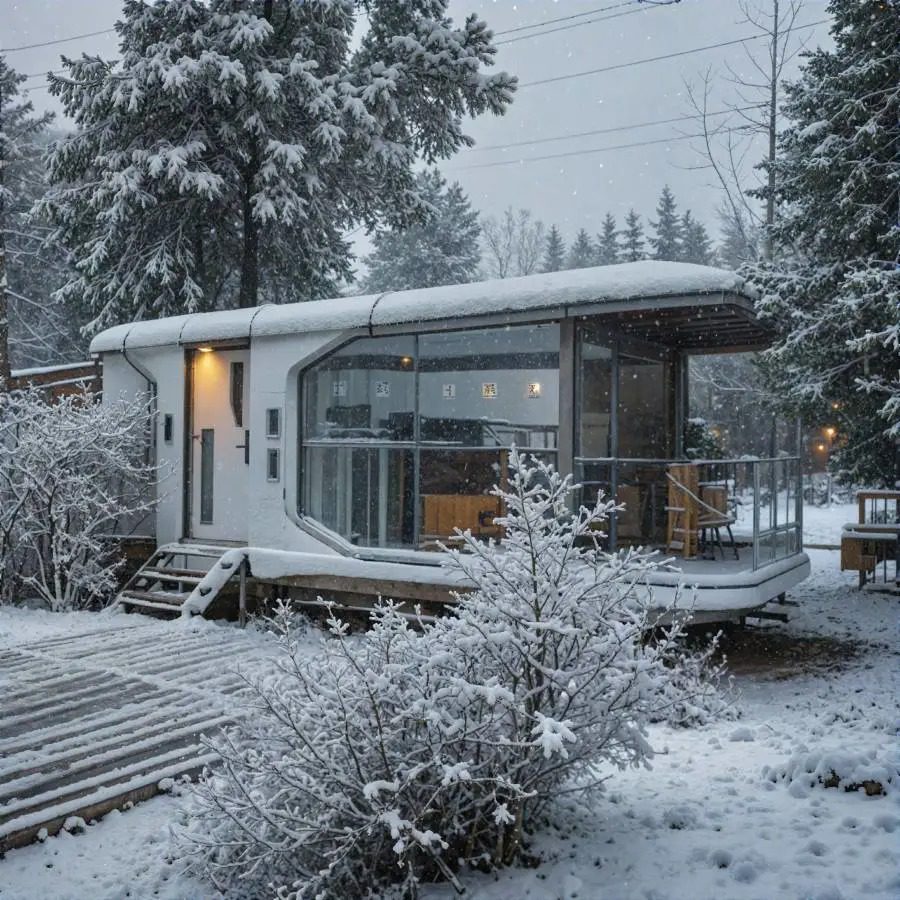 INSULATION AND CLIMATE COMFORT
POINTS TO REVIEW
Review insulation thickness, R-value, air sealing, condensation control, thermal bridging, and Canadian climate performance.
Compare insulation type, thickness, R-value, and performance across walls, roof, and floor.
Control drafts and heat loss by sealing joints, openings, penetrations, and transitions.
Address condensation, vapor control, drainage, and protection of metal components.
Match insulation performance with ventilation, heating, cooling, and seasonal use.
BEFORE MOVING FORWARD
The exact answers depend on the property, municipality, model, and professionals involved.
What insulation type and thickness are installed?
How are thermal bridges and air leaks controlled?
How is condensation managed?
Is the system designed for year-round Canadian use?
In a steel-framed container house, insulation cannot be evaluated by thickness alone. Good cold-climate performance depends on the insulation material, installed thickness, continuity, air sealing, vapor and moisture control, thermal bridges, windows, doors and the heating and ventilation systems working together.
Steel transfers heat quickly, so gaps in the insulation layer or exposed structural members can create cold surfaces and condensation risks. The objective is a continuous thermal and air-control strategy appropriate for the climate and intended use of the home.
R-value measures resistance to heat flow. A higher number generally indicates greater thermal resistance, but the published R-value of an insulation product is not the same as the performance of the complete wall, roof or floor assembly. Framing, joints, fasteners, openings and installation quality can all affect the result.
CHC product information currently references approximately 150 mm (about 6 inches) of foam insulation on certain expandable configurations. The exact insulation product, assembly and resulting R-value should always be confirmed on the specification or quotation for the model being ordered.
Closed-cell spray polyurethane foam can provide useful thermal resistance while also helping control air leakage and moisture when properly specified and installed. Because it adheres directly to surfaces, it can be effective around irregular steel framing and junctions where air gaps would otherwise be difficult to seal.
Other insulation systems can also be appropriate. The correct choice depends on the building assembly, local requirements, available interior space and the performance target for the project.
Warm indoor air contains moisture. When that moisture reaches a sufficiently cold surface, condensation can occur. In a steel building, this makes the placement and continuity of insulation and air/vapor-control layers particularly important.
Insulation reduces heating and cooling demand, but it does not replace properly sized mechanical systems. Heating, cooling and ventilation should be selected for the finished building, climate and occupancy. A well-sealed home also needs planned ventilation to maintain indoor air quality and manage humidity.
Do not rely on a generic insulation number when comparing homes. Ask for the insulation type, thickness and relevant assembly information for the exact model and configuration you are considering. If you are planning a year-round residence, discuss the local requirements with the professionals responsible for permits and installation.
Next, review foundation preparation, plumbing and electricity and municipal requirements as part of the same project plan.
RELATED NEXT STEPS
Find collections that fit the confirmed requirements.
Explore Our Models →See how we coordinate the product, documentation, and logistics.
View Our Services →Plan property access, unloading, and installation requirements.
View Delivery Details →READY FOR A MORE PRECISE CONVERSATION
Include the model, province, municipality, intended use, and timeline.