
Site and soil review
Evaluate slope, drainage, bearing capacity, frost conditions, and access.
PREPARING A SOLID BASE
A properly designed foundation or support system is one of the most important parts of a container-style or modular project. The appropriate solution depends on the selected model, structural loads, soil, drainage, frost conditions, utilities and local requirements. Without proper groundwork,…
 PREPARING A SOLID BASE
POINTS TO REVIEW
Create a level, stable, properly drained foundation system that supports the model and local climate requirements.
Evaluate slope, drainage, bearing capacity, frost conditions, and access.
Compare slabs, piers, footings, crawlspaces, piles, and engineered supports.
Grade the property and plan gravel, drainage, membranes, and water management.
Confirm support points, anchoring, alignment, elevations, and inspections.
BEFORE MOVING FORWARD
The exact answers depend on the property, municipality, model, and professionals involved.
Has the soil and drainage condition been evaluated?
Which foundation type is approved for the project?
Are support points aligned with the model drawings?
Is the base complete and level before delivery?
Building a container house is an exciting step toward affordable, sustainable, and modern living. Shipping containers offer durability, flexibility, and quick construction timelines, but one critical element determines whether your project succeeds or struggles over time: a solid base. Poor site or foundation preparation can contribute to settlement, alignment, drainage or moisture problems. Foundation design should be based on project-specific information rather than a generic container-house rule.
In this guide, we’ll walk through everything you need to know about creating a solid base for your container house, from site selection and soil testing to foundation types and drainage solutions.
Load paths differ between converted freight containers and purpose-built modular/container-style models. Use the structural support points and foundation requirements specified for the exact model. Settlement or poor drainage can affect alignment, structure, doors, windows, seals and moisture performance. The actual risk depends on the site and building design.
A solid base also protects your home from environmental factors. Ground moisture, frost heave, erosion, and seasonal expansion can all affect stability. By investing time in proper groundwork, you reduce maintenance costs and improve the long-term performance of your container house.
Before choosing materials or foundation types, assess the land where your container home will sit.
Start with slope and drainage. Ideally, your site should be slightly elevated or gently sloped to allow rainwater to flow away from the structure. Avoid low spots where water pools after storms. Standing water can weaken soil and cause foundation shifting.
Next, examine soil composition. Clay-heavy soil expands when wet and contracts when dry, which can lead to movement beneath your home. Sandy soil drains well but may require reinforcement to prevent shifting. Rocky or compacted soil tends to provide the most stable support.
Obtain the geotechnical or soil information required by the project designer or authority having jurisdiction, and use qualified engineering advice where required. Understanding load-bearing capacity ensures your foundation design matches ground conditions, preventing future structural problems.
Once you’ve selected a suitable site, clear it thoroughly. Remove vegetation, roots, organic matter, and debris. Organic materials decompose over time, creating voids beneath your foundation that can cause settling.
After clearing, level the area. Precision matters here — even small slopes can affect how containers sit on their supports. Use stakes, string lines, and a level to ensure accuracy. For larger builds, laser levels or surveying equipment may be worthwhile.
Compaction comes next. Use a plate compactor or roller to compress the soil and reduce air pockets. Compacted soil provides a stronger, more uniform base for your foundation system.
There’s no single universal foundation for container homes. The best option depends on climate, soil, budget, and design. However, all effective solutions share one goal: creating a solid base that evenly distributes weight and prevents movement.
1. Concrete Pier Foundation
Concrete piers may be appropriate for some models and sites when designed for the actual loads, soil, frost, anchoring and local requirements. Support locations must follow the structural design.
2. Slab Foundation
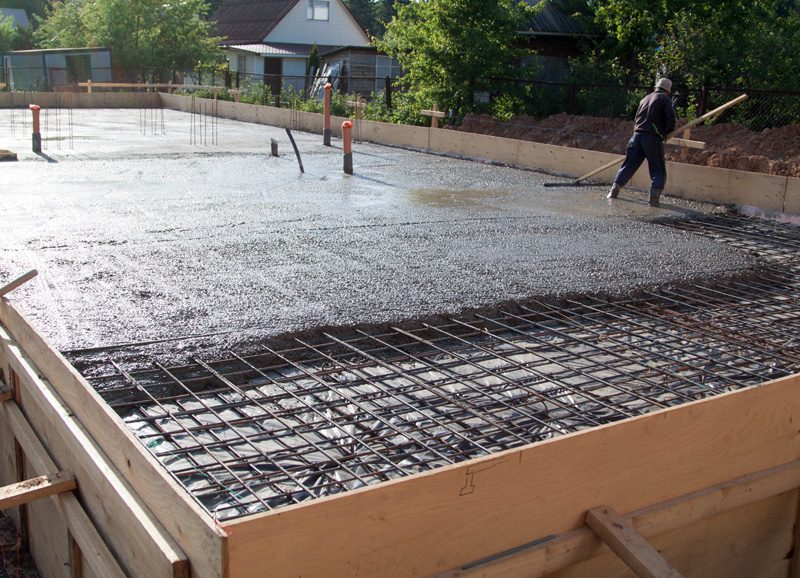
A reinforced concrete slab may be appropriate for some projects, but suitability depends on the building, soil, frost, drainage, insulation, services and structural design. It distributes weight evenly across the ground and provides a clean finished floor. Slabs work best where frost depth is manageable and drainage is properly designed.
3. Gravel Pad Foundation
A compacted granular base may be suitable for selected projects only when the building classification, loads, soil, drainage, frost and local requirements allow it. Layers of crushed stone create drainage and support while preventing soil movement. However, gravel pads should be carefully engineered and often paired with concrete footings for better stability.
4. Strip Footings or Perimeter Foundations
Strip or perimeter foundations are another possible system when designed for the project loads, ground conditions, frost and local requirements. These foundations combine durability with adaptability and are suitable for areas with freezing temperatures.
Regardless of which method you choose, the foundation must keep the container level and well-supported at key load points.
A solid base isn’t just about supporting weight — it’s also about controlling water. Poor drainage is one of the leading causes of foundation damage.
Start by grading the surrounding soil so water flows away from the home. Site grading and drainage slopes should follow the project design and local requirements; avoid relying on a universal percentage. Next, install drainage channels or French drains if your site receives heavy rainfall.
Adding a layer of gravel beneath the foundation improves drainage and prevents moisture from pooling under the container. You can also install a vapor barrier or moisture membrane to protect against rising dampness.
These measures extend the life of your container’s steel frame by minimizing rust and corrosion.
Different climates pose different challenges, and your foundation design should reflect local conditions.
In cold regions, frost heave can push foundations upward as frozen ground expands. Frost-protection requirements vary by jurisdiction, soil, building use and foundation system. Follow the applicable design and local requirements. Insulated foundations or frost-protected shallow footings may also help maintain stability.
In hot, dry climates, soil shrinkage can occur when moisture evaporates. Reinforced concrete or deeper footings help prevent shifting.
Coastal or flood-prone areas require elevated foundations to protect against water damage. Flood-prone or coastal projects may require elevation, flood-resistant design or other measures established by the applicable authority and qualified professionals.
Understanding your environment ensures your solid base performs reliably year-round.
Once the foundation is prepared, securing the container is essential. Containers are heavy, but strong winds or shifting soil can still cause movement if they aren’t anchored.
Anchoring details must be compatible with the selected model and engineered foundation. Do not improvise structural connections. Proper anchoring prevents lateral movement and improves resistance to storms or seismic activity.
The foundation, anchoring and building structure should be treated as one coordinated structural system.
Before adding walls, insulation, or roofing modifications, confirm that your container sits perfectly level on its base. Use a laser level or long spirit level to check alignment.
If you notice any unevenness, correct it immediately. Small adjustments are easy before construction continues, but costly afterward.
This inspection ensures your home’s doors, windows, and structural components function correctly once the build is complete.
Preparing a solid base requires effort, planning, and sometimes professional help, but the benefits are substantial.
A properly designed foundation helps manage settlement, alignment and structural loads; future maintenance still depends on the complete building and site. It improves insulation performance by keeping the container properly aligned. Do not assume a specific property-value increase from a foundation type. Value depends on the complete property, approvals, market and condition.
Most importantly, a reliable base provides peace of mind. Your container house isn’t just a temporary structure — it’s a home designed to last.
A container home may be made of industrial steel, but its performance ultimately depends on what lies beneath it. By carefully evaluating your site, selecting the right foundation type, ensuring proper drainage, and accounting for climate conditions, you create a solid base that supports every other part of the build.
Think of the foundation as the invisible hero of your container house. It doesn’t attract attention like design finishes or interior features, but it quietly determines how well your home stands the test of time.
Plan the foundation early, confirm the model support requirements and coordinate drainage, utilities, anchoring and inspections before delivery.
RELATED NEXT STEPS
Find collections that fit the confirmed requirements.
Explore Our Models →See how we coordinate the product, documentation, and logistics.
View Our Services →Plan property access, unloading, and installation requirements.
View Delivery Details →READY FOR A MORE PRECISE CONVERSATION
Include the model, province, municipality, intended use, and timeline.