
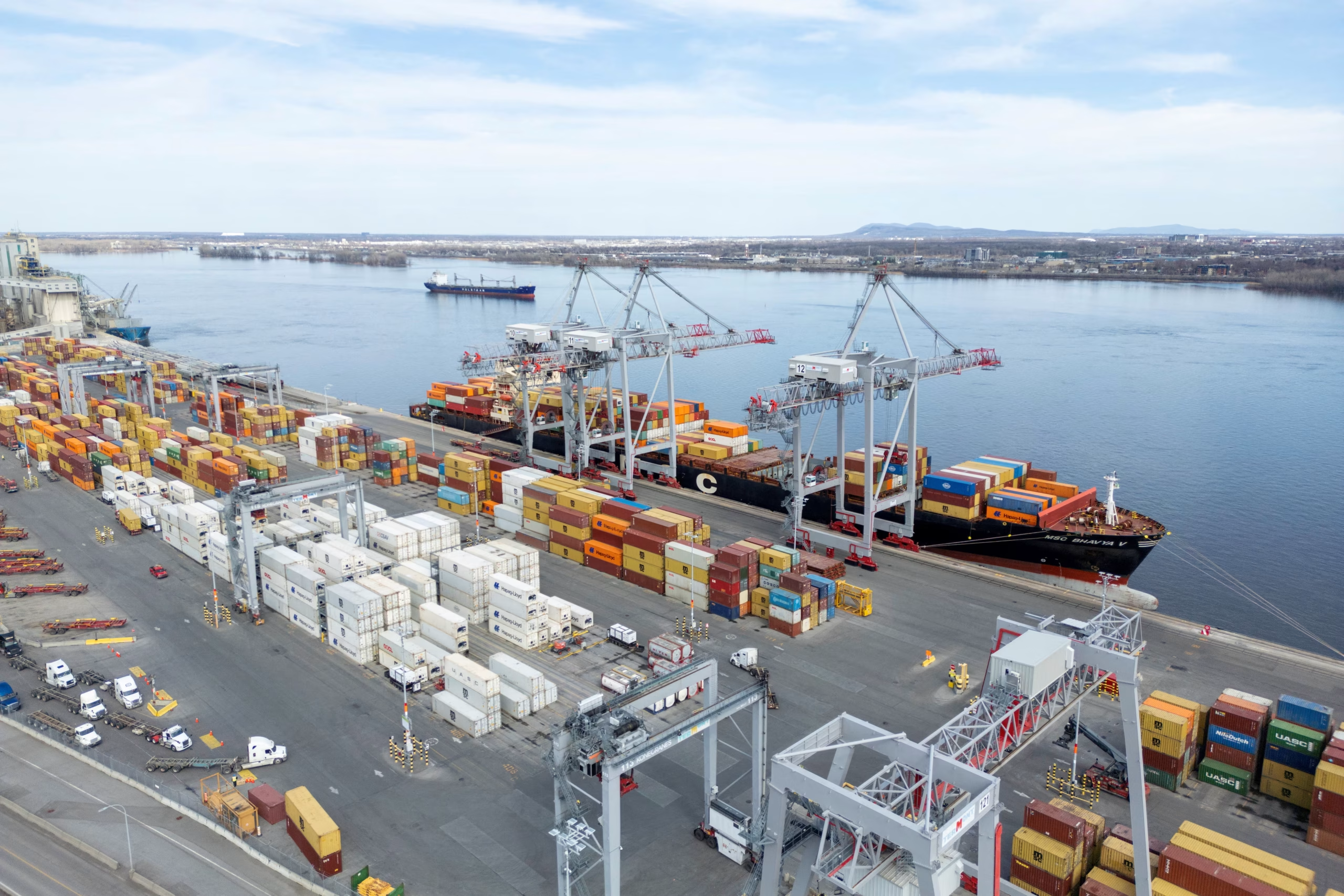
International trade between Asia and Canada depends heavily on efficient logistics, reliable ports, and well-planned sea transport routes. Whether you import construction materials, manufactured goods, or container houses, understanding how long international transport from Asia to Canada takes is essential for planning inventory, budgets, and customer expectations.
This guide explains the main stages that affect ocean transport from Asia to Canada and provides planning examples. Carrier schedules, routes, customs processing, port conditions and inland delivery change over time, so any transit range should be confirmed for the specific shipment.
Understanding international transport between Asia and Canada
International transport from Asia to Canada mainly occurs through ocean freight because it is the most economical method for moving large volumes of goods. Air freight is faster but significantly more expensive, making sea transport the preferred choice for bulk shipments.
Major Asian export hubs include ports in China, South Korea, Japan, Vietnam, and India. Key Canadian entry points include the Port of Vancouver, Port of Prince Rupert, Port of Montreal, and Port of Halifax.
For example, cargo leaving Shanghai or Shenzhen often arrives on Canada’s west coast before continuing inland via rail or trucking.
Average sea transport time from Asia to Canada
***Custom orders may take longer. The examples below are planning ranges only, not guaranteed transit times. Confirm the current carrier schedule, route and destination before relying on a delivery date.
West Coast Canada routes
- China to Vancouver: 14–20 days
- South Korea to Vancouver: 12–18 days
- Japan to Vancouver: 10–16 days
- Vietnam to Vancouver: 18–24 days
Ships often arrive at Vancouver, Canada’s largest container gateway, or at Prince Rupert, known for faster cargo turnaround times.
East Coast Canada routes
Cargo destined for eastern Canada often travels through the Panama Canal or trans-shipment hubs.
- China to Montreal: 28–40 days
- India to Halifax: 30–42 days
- Southeast Asia to Montreal: 32–45 days
Eastern shipments frequently enter through Montreal or Halifax, depending on route optimization and shipping schedules.
Why sea transport times vary
Shipping timelines are rarely fixed because international transport involves multiple logistical steps.
1. Distance and routing
Routes across the Pacific are shorter than those crossing the Panama Canal to reach eastern Canada. A vessel traveling directly from East Asia to the west coast will arrive much faster than one routed through Central America.
2. Port congestion
Busy ports can delay unloading. For example, congestion at Port of Vancouver or large Asian terminals can add several days to transit time during peak shipping seasons.
3. Customs clearance
Canadian import inspections, documentation checks, and duties processing can add 2–7 days depending on paperwork accuracy.
4. Weather conditions
Typhoons in the Pacific, winter storms near Canada, or rough seas can slow vessels and reroute shipping lanes.
5. Container handling and inland transport
Once cargo reaches Canada, it may still require rail transport to provinces like Ontario or Quebec, adding 3–10 additional days.
Total door-to-door shipping time estimate
When calculating international transport, businesses must consider the entire logistics chain rather than just sea transport.
Typical timeline example:
- Factory preparation in Asia: 3–7 days
- Container loading and port transfer: 2–5 days
- Sea transport: 14–35 days
- Customs clearance in Canada: 2–7 days
- Inland trucking or rail delivery: 3–10 days
Total door-to-door time:
👉 Usually 24–60 days
This is the realistic timeframe for most Asia shipping projects.
Peak seasons affecting Asia shipping duration
Some periods of the year cause longer delays in international transport.
Chinese New Year shutdown
Manufacturing and shipping activity can slow around major holiday periods in China, creating backlogs and schedule changes.
Summer export rush
Retailers stock inventory for fall and winter sales, increasing demand for containers.
Holiday import surge
Shipments heading to Canada before Christmas can face significant delays due to port volume.
Planning around these periods can significantly improve shipping predictability.
How shipping method impacts delivery time
Full Container Load (FCL)
FCL shipments travel faster because containers are sealed and sent directly without consolidation delays.
Typical FCL transit time:
20–35 days total door-to-door
Less-than-Container Load (LCL)
LCL cargo requires sorting and consolidation, which adds handling time.
Typical LCL transit time:
30–55 days
Businesses importing large structures or modular buildings often benefit from FCL shipments to reduce delays and handling risk.
How shipping companies affect transit time
Carrier schedules, fleet size, and route frequency influence delivery times.
Global logistics providers such as Maersk, MSC, and CMA CGM offer frequent Asia-Canada routes, improving scheduling reliability.
Choosing a reputable carrier often reduces delays compared to smaller regional shipping operators.
Tips to reduce international transport delays
Book shipping early
Securing container space weeks in advance prevents peak-season congestion problems.
Prepare documents accurately
Incorrect invoices, packing lists, or HS codes can delay customs clearance.
Choose west coast entry when possible
For shipments bound for western Canada or central provinces, Vancouver or Prince Rupert often provide the fastest access.
Work with experienced freight forwarders
Professional logistics partners can optimize routing, manage paperwork, and track shipments throughout the sea transport process.
Environmental factors in sea transport
Ocean freight remains the most sustainable method for international transport compared to air cargo. Modern vessels reduce fuel consumption through optimized routing, cleaner fuels, and improved hull designs.
Shipping companies increasingly follow environmental regulations from organizations such as the International Maritime Organization.
Carrier environmental and fuel requirements can affect vessel operations, routing and costs; the effect on any individual shipment varies.
Cost versus speed in Asia shipping
Businesses must balance shipping speed and budget.
- Air freight: 3–8 days but extremely expensive
- Sea freight express routes: 12–18 days premium pricing
- Standard sea transport: 20–40 days economical
For large modular structures, the transport method is selected based on dimensions, route, handling requirements, carrier availability, cost and delivery plan.
Real-world example of Asia to Canada shipping timeline
Consider a shipment leaving Shenzhen destined for Quebec:
- Factory loading: 4 days
- Transport to port: 2 days
- Ocean transit to Vancouver: 16 days
- Customs clearance: 3 days
- Rail transport to Montreal: 7 days
- Trucking to final destination: 2 days
Total time: 34 days
This hypothetical example illustrates why planning must include origin handling, ocean transit, customs and inland logistics. It is not a delivery-time guarantee for a CHC order.
Internal Resources
Learn more about container logistics and shipping planning here:
- https://containerhousescanada.ca/shipping-container-homes
- https://containerhousescanada.ca/importing-container-houses
- https://containerhousescanada.ca/modular-housing-delivery
- https://containerhousescanada.ca/cost-of-container-homes
These guides explain delivery timelines, permits, and logistics considerations for modular buildings and container structures.
External Resources
For official shipping and trade information:
- https://www.cbsa-asfc.gc.ca/import/menu-eng.html
- https://www.portvancouver.com
- https://www.maersk.com/logistics-explained
- https://www.tradecommissioner.gc.ca
These sources provide customs rules, port operations data, and international logistics guidance.
Final thoughts on Asia shipping to Canada
International transport from Asia to Canada usually takes three to eight weeks, depending on route, carrier, season, and inland delivery distance. While sea transport offers the most cost-effective shipping solution, careful planning is essential to avoid delays.
By understanding shipping routes, customs processes, and logistics timelines, businesses can improve delivery accuracy, reduce costs, and maintain customer satisfaction.