
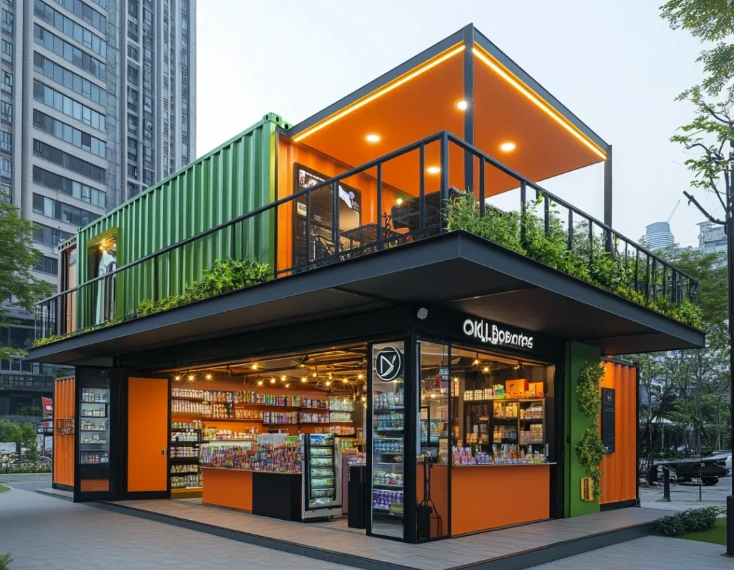
Modern companies demand spaces that are flexible, fast to deploy, and tailored to their operational reality. Whether for retail, offices, storage, hospitality, or industrial operations, one- or two-level business containers offer a smart and scalable solution. With the largest selection of modular units available today, commercial containers are redefining how organizations design, build, and expand their spaces.
In this comprehensive guide, we explore how containers, business adaptability, commercial functionality, and personalized design combine to create an efficient and future-ready workspace solution.
The evolution of commercial container spaces
Shipping containers were once purely logistical tools. Today, they form the backbone of modern modular architecture. Businesses across Canada and beyond now use container structures for:
- Retail pop-ups and permanent storefronts
- Offices and coworking hubs
- Restaurants, cafés, and food service units
- Medical clinics and mobile service centres
- Industrial and on-site project offices
The shift happened because companies realized that traditional construction often lacks speed and flexibility. Container solutions, by contrast, offer rapid deployment and adaptable layouts without compromising durability.
Their steel structure ensures strength, while modular engineering allows stacking and combining units to create fully functional one- or two-level buildings.
Why businesses choose container structures
1. Speed of installation
Commercial containers can be manufactured, customized, and installed far faster than traditional buildings. For many businesses, this means launching operations months earlier than expected.
Earlier openings lead directly to faster revenue generation — one of the main reasons container solutions are becoming standard in many industries.
2. Scalability and modular expansion
A major advantage of container architecture is that it grows with your business.
A company may begin with a single container unit. As demand increases, additional modules can be added, stacked, or connected. Two-level container complexes are particularly popular because they double floor space without increasing land use.
This approach allows companies to scale responsibly and avoid the financial risk of oversized buildings.
3. Cost efficiency
Compared with conventional construction, container buildings can significantly reduce:
- Construction timelines
- Labour costs
- Material waste
- Site disruption
Because most of the fabrication happens off-site, businesses benefit from predictable budgeting and fewer delays.
4. Mobility and relocation potential
Unlike traditional buildings, container units can be relocated when needed.
For businesses operating in seasonal industries, temporary zones, or leased properties, this flexibility is invaluable. When a lease ends or demand shifts, the structure can move with the business.
This mobility turns containers into long-term strategic assets rather than fixed investments.
One-level business containers: simple, efficient, powerful
Single-level commercial containers remain the most common solution due to their simplicity and versatility.
Ideal uses include:
- Retail shops
- Ticket offices
- Security posts
- Sales centres
- Food kiosks
- Storage and logistics hubs
Their straightforward layout makes them easy to install on almost any site. They also require less foundation preparation than multi-level units, making them ideal for rapid deployment projects.
A one-level configuration is perfect for businesses seeking efficiency, minimal setup time, and strong visual branding opportunities.
Two-level business containers: maximizing space and visibility
For companies needing more capacity, two-level container buildings offer a powerful solution.
Stacking containers creates a dynamic architectural presence while maximizing usable square footage.
Benefits of two-level commercial containers
Increased capacity
Double the space without doubling the land footprint.
Enhanced branding impact
Multi-level designs stand out visually and attract attention.
Functional zoning
Businesses can separate customer areas from operational spaces. For example:
- Ground floor: retail or reception
- Upper floor: offices or meeting rooms
Improved site efficiency
Ideal for urban or high-traffic environments where land is limited.
Personalized design: turning containers into business assets
Customization is what transforms a container from a simple structure into a professional commercial environment.
Today’s container solutions can be personalized in nearly every aspect.
Exterior customization options
- Brand colors and graphics
- Glass façades or display windows
- Decorative cladding (wood, metal, composite panels)
- Signage and lighting integration
- Outdoor terraces or rooftop decks
These features allow businesses to create a strong visual identity that matches their brand image.
Interior personalization possibilities
Inside, containers can be designed to function like modern offices or retail spaces.
Common options include:
- Insulated walls and ceilings
- HVAC systems and ventilation
- Electrical and data wiring
- Plumbing installations
- Custom flooring and lighting
- Built-in furniture or shelving
These features ensure that container buildings meet both comfort and professional standards.
Industries benefiting from commercial containers
Retail and pop-up stores
Retailers increasingly use container units to test new markets or expand into high-traffic zones quickly.
Containers allow brands to open temporary or permanent stores without committing to long-term leases or heavy construction.
Hospitality and food service
Restaurants, cafés, and event food vendors rely on container kitchens because they are compact, efficient, and compliant with health regulations when properly fitted.
Their modular nature allows operators to expand seating areas or add service counters as needed.
Construction and industrial sectors
On-site container offices provide project managers and staff with comfortable working spaces close to operations.
Two-level units can house offices, meeting rooms, and break areas in a compact footprint.
Public services and healthcare
Mobile clinics, vaccination centres, and municipal service offices frequently use container buildings due to their rapid deployment and adaptability.
They can be installed quickly during emergencies or infrastructure expansions.
Sustainability advantages of container buildings
Businesses today seek environmentally responsible construction methods. Container architecture aligns with sustainability goals in several ways.
Reuse of existing materials
Repurposing shipping containers reduces demand for new construction materials and extends the life of durable steel units.
Reduced construction waste
Off-site fabrication minimizes debris and site disruption.
Energy efficiency options
Containers can be fitted with:
- High-performance insulation
- Solar panels
- Energy-efficient lighting
- Smart climate control systems
These features reduce operational costs and environmental impact.
For additional sustainability insights, see:
External resource: https://www.archdaily.com/search/projects/categories/container-architecture
Planning your commercial container project
Before choosing a one- or two-level container configuration, businesses should evaluate several factors.
Site conditions
- Ground stability
- Access for delivery trucks or cranes
- Utility connections
- Zoning regulations
A proper site evaluation ensures a smooth installation process.
Functional requirements
Businesses should clearly define:
- Number of employees or customers
- Required equipment
- Storage needs
- Accessibility requirements
This information determines the number of units and layout design.
Future expansion plans
Planning ahead is crucial. Even if a company starts with a single unit, designing for modular expansion saves time and money later.
Container architecture is most effective when viewed as a scalable system rather than a one-time build.
Cost considerations for personalized container buildings
Prices vary depending on customization, size, and site requirements.
Factors affecting cost include:
- Structural modifications
- Insulation and climate control
- Interior finishes
- Plumbing and electrical systems
- Transportation and installation
Despite these variables, container buildings often remain more economical than conventional construction.
Businesses benefit from clear budgets, faster completion, and reduced risk of cost overruns.
Branding opportunities with container architecture
Commercial containers are not only functional — they are powerful marketing tools.
Their distinctive appearance naturally draws attention, making them ideal for:
- Launch events
- Pop-up experiences
- Product showcases
- Seasonal promotions
Companies can transform containers into immersive brand environments that stand out in crowded commercial zones.
Compliance and safety considerations
Professional container suppliers ensure buildings meet local codes and safety standards.
This includes:
- Structural certification
- Fire safety measures
- Electrical compliance
- Accessibility standards
Working with experienced manufacturers guarantees that personalized containers are both attractive and fully compliant.
For regulatory guidance, consult:
External resource: https://nrc.canada.ca/en/certifications-evaluations-standards/codes-canada
Internal resources for further reading
To learn more about modular and container solutions, explore:
Internal link: https://containerhousescanda.ca/commercial-container-solutions
Internal link: https://containerhousescanda.ca/custom-container-design
These resources provide additional insights into customization options and business applications.
The future of commercial container spaces
As businesses seek faster, smarter, and more sustainable construction methods, container architecture continues to evolve.
Innovations in modular engineering, energy efficiency, and design aesthetics are transforming containers into premium commercial spaces.
Two-level container complexes, rooftop terraces, and integrated smart technologies are becoming increasingly common.
For many organizations, containers are no longer temporary structures — they are strategic infrastructure.
Conclusion: building smarter with personalized commercial containers
One- or two-level business containers personalized to your needs represent one of the most efficient and flexible solutions available today.
They offer:
- Rapid deployment
- Scalable expansion
- Cost efficiency
- Sustainability benefits
- Strong branding potential
With the largest selection of customizable options, container architecture empowers businesses to create professional, functional, and visually striking spaces tailored to their operations.
As the commercial landscape continues to evolve, container buildings stand at the forefront of modern construction — adaptable, efficient, and designed for the future.
Comments are closed