
Container houses are no longer experimental structures — they are fully functional homes, vacation rentals, and commercial spaces across Canada and beyond. One of the most common questions buyers ask before ordering a unit is simple:
Can a container house include a washer and dryer, plus a dishwasher?
The short answer is yes — all modern appliances can be installed in container homes. The longer answer involves planning, plumbing installation, electrical setup, and smart layout design. When these factors are considered early, container homes can offer the same comfort as traditional houses — sometimes even better efficiency.
This guide explains everything you need to know about installing a washer and dryer, dishwasher, and plumbing systems in a container house, including feasibility, costs, design strategies, and building code considerations in Canada.
Why Appliances Work Well in Container Homes

Container houses are built with steel structures, which many people assume makes plumbing and appliance installation difficult. In reality, container homes are ideal for compact, efficient mechanical systems because:
- Their layouts are modular and predictable
- Plumbing lines can run beneath raised floors
- Utility walls can concentrate water and drainage points
- Modern prefab containers often come pre-wired and pre-plumbed
Unlike traditional homes where pipes run through multiple structural walls, container homes allow for centralized wet zones, meaning kitchens, bathrooms, and laundry areas share plumbing lines. This reduces cost and improves maintenance access.
Installing a Washer and Dryer in a Container House
A washer and dryer setup requires three essential components:
- Water supply lines
- Drainage system
- Electrical or gas connection
If your container home includes a bathroom and kitchen, the water supply and drainage system already exist. Extending them to a laundry unit is usually straightforward.
Water Requirements
Washers need both hot and cold water connections. In container homes, these are typically routed through a service wall behind the bathroom or kitchen. Installing the washer near that wall minimizes pipe length and prevents pressure loss.
For off-grid container homes, washers can connect to:
- Rainwater filtration systems
- Water tanks with pumps
- Well water systems
Compact, high-efficiency washers are ideal because they use less water per cycle.
Drainage and Greywater Management
All washers discharge greywater. Your container house drainage must therefore connect to:
- Municipal sewer systems
- Septic systems
- Approved greywater recycling systems
In Canada, plumbing must comply with regulations referenced by the National Plumbing Code of Canada. Most container home manufacturers already design systems to align with these standards.
To avoid vibration and noise issues, washers are typically installed on:
- Reinforced flooring panels
- Rubber vibration pads
- Structural cross-supports
This prevents the steel structure from amplifying sound.
Dryer Options for Container Houses
Dryers present slightly more design choices.
Ventless Condenser Dryers
These are ideal for container homes because they:
- Require no external vent
- Use standard electrical outlets
- Are compact and energy efficient
Heat Pump Dryers
Heat pump dryers consume less electricity and generate less heat, which is useful in small spaces.
Many models certified by ENERGY STAR are designed specifically for apartments and small homes, making them perfect for container installations.
Traditional Vented Dryers
These are still possible but require:
- A vent opening through the steel wall
- Insulated ducting
- Weatherproof exterior covers
Professional installation ensures the steel shell maintains its structural integrity.
Installing a Dishwasher in a Container House
Dishwashers are even easier to integrate than laundry machines.
They only require:
- One hot water line
- A drain connection
- A power outlet
Most container kitchens already include these connections.
Cabinet Integration
Dishwashers can be installed:
- Under standard countertops
- In compact kitchenettes
- In outdoor container kitchens
Slim dishwashers (18-inch width) are especially popular in container homes because they save space while still handling daily loads.
Water Pressure Considerations
Dishwashers need steady water pressure. In container houses pumps or tanks, pressure regulators ensure consistent flow.
If your container home connects to municipal water, pressure is usually sufficient.
Plumbing Installation in Container Homes
Plumbing installation is one of the most important design steps in a container house.
Unlike conventional homes where pipes are hidden in framing, container homes often use:
- Raised floors
- Service walls
- Utility chases
This makes maintenance easier and reduces the need to cut structural steel.
Typical Container Plumbing Layout
A well-designed container home clusters water appliances together:
- Kitchen sink + dishwasher on one wall
- Bathroom directly behind kitchen
- Laundry stacked near bathroom
This reduces pipe length and improves heat retention in winter climates like Quebec.
Insulation and Freeze Protection
In colder regions, plumbing lines must be protected.
Common solutions include:
- Foam-insulated service cavities
- Heated pipe wraps
- Routing pipes through interior zones
Container homes built for Canadian climates often include pre-insulated plumbing modules certified by organizations like CSA Group.
Electrical Requirements for Appliances
Washer, dryer, and dishwasher installations depend heavily on electrical planning.
Washer Power Needs
Most washers operate on standard 120V outlets.
Dryer Power Needs
Dryers may require:
- 240V outlets (electric dryers)
- Gas connections (gas dryers)
Container homes designed for full-time living usually include a dedicated appliance panel.
Dishwasher Power Needs
Dishwashers typically use a standard outlet but must be installed on a GFCI-protected circuit for safety.
Space-Saving Appliance Layouts
Container homes benefit from multi-functional appliance zones.
Popular layouts include:
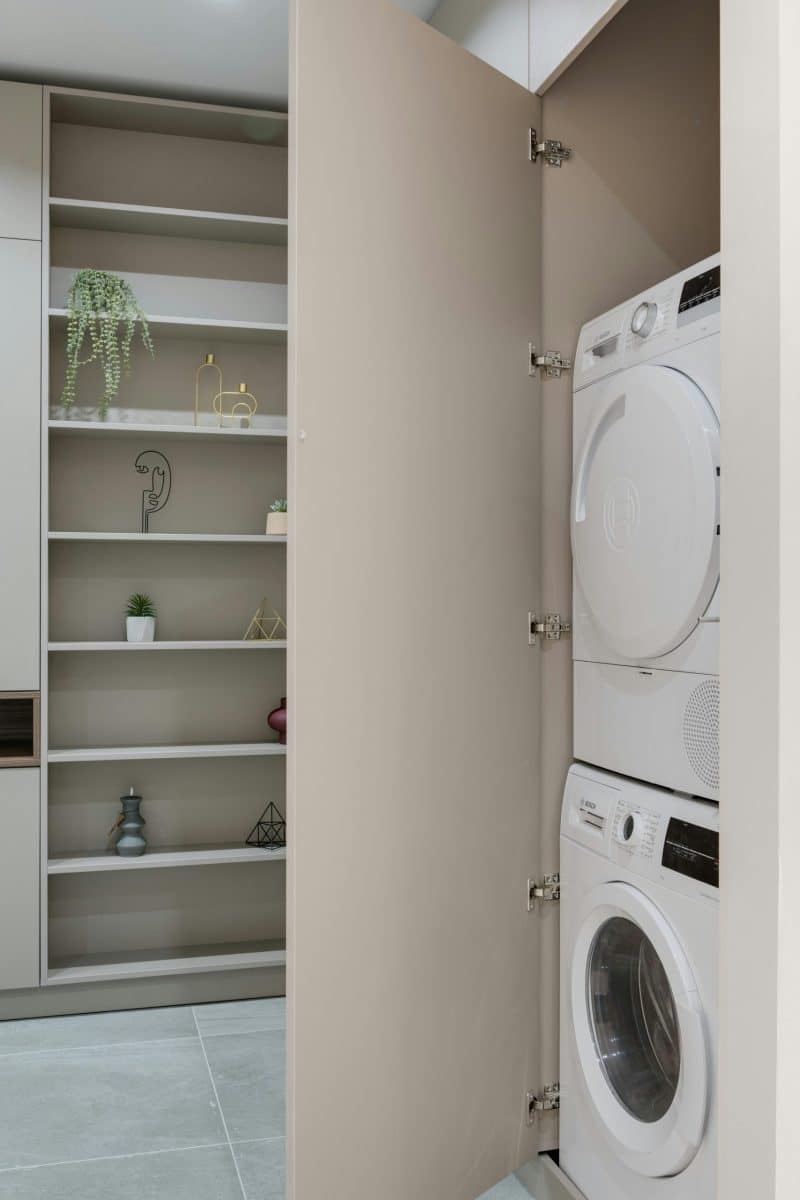
Laundry Closet Design
- Stacked washer/dryer units
- Sliding doors
- Shared plumbing with bathroom
Kitchen Appliance Wall
- Dishwasher next to sink
- Washer integrated into cabinet row
- Combined utility counter
Outdoor Utility Modules
Some container homes place laundry equipment in a separate service container to:
- Reduce indoor noise
- Save living space
- Simplify ventilation
Off-Grid Container Houses and Appliances
Even off-grid container homes can include washers and dishwashers.
Key considerations include:
- Solar power capacity
- Battery storage
- Water tank size
High-efficiency appliances designed for RVs and micro-homes are ideal in these situations.
Cost of Installing Appliances in a Container Home
Costs vary depending on whether your container home is factory-built or custom modified.
Typical installation ranges:
- Washer plumbing setup: $300–$900
- Dryer electrical upgrade: $200–$600
- Dishwasher plumbing connection: $150–$500
Factory-installed systems are usually cheaper than retrofits.
Many container home suppliers also offer appliance packages sourced from retailers like Home Depot, simplifying procurement and installation.
Advantages of Installing Appliances in Container Houses
Including washer, dryer, and dishwasher units offers multiple benefits.
Increased Property Value
Homes with full appliance systems sell faster and command higher resale prices.
Rental Income Potential
Vacation rentals with in-unit laundry and dishwasher access attract higher nightly rates.
Improved Daily Convenience
Compact homes benefit significantly from built-in efficiency features.
Common Mistakes to Avoid
When planning appliance installation in a container house, avoid these pitfalls:
Ignoring appliance dimensions
Compact spaces require exact measurements.
Installing plumbing too late
Water lines must be planned before interior finishing.
Underestimating electrical load
Multiple appliances running simultaneously require proper circuit planning.
Skipping insulation around pipes
Cold climates demand freeze-proof systems.
Future-Proofing Your Container Home
Even if you don’t install appliances immediately, planning the connections now saves money later.
Smart future-proofing steps include:
- Installing capped water lines
- Adding extra electrical conduits
- Reinforcing flooring in laundry areas
This allows upgrades without major renovations.
Final Verdict: Are Washer, Dryer, and Dishwasher Possible in a Container House?
Absolutely.
Modern container homes are designed to function like traditional houses. With proper plumbing installation, electrical planning, and layout design, they can include:
- Full laundry systems
- Standard or compact dishwashers
- High-efficiency water systems
In many cases, container homes handle appliance integration better than older traditional houses, thanks to modular design and centralized utilities.
Internal Links to Your Content
- /benefits-of-container-home-living
- /off-grid-container-house-systems
- /container-house-kitchen-designs
For readers wanting deeper technical standards or appliance information, useful resources include:
- National Plumbing Code of Canada
- CSA Group
- ENERGY STAR
- Home Depot
Comments are closed